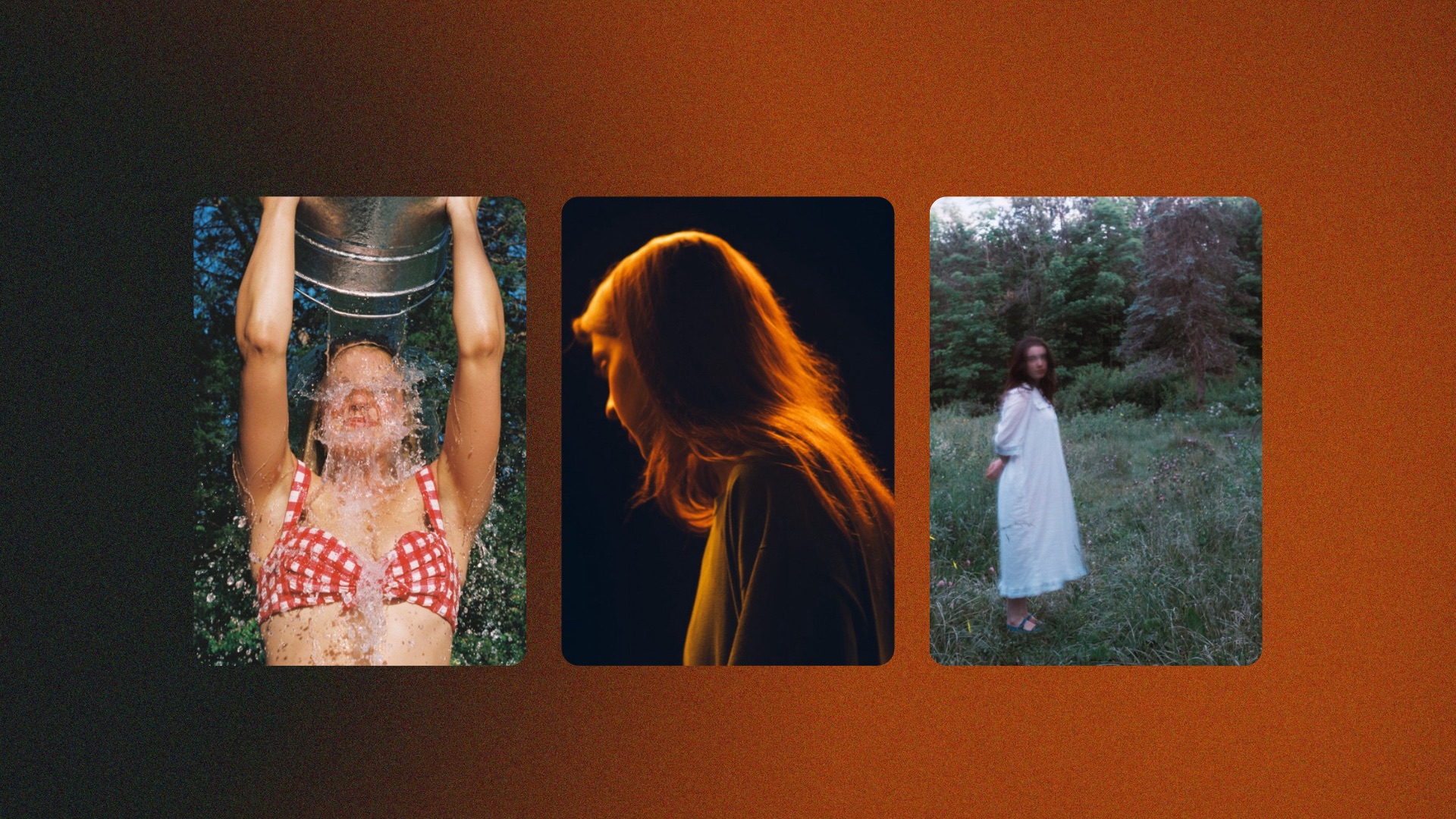
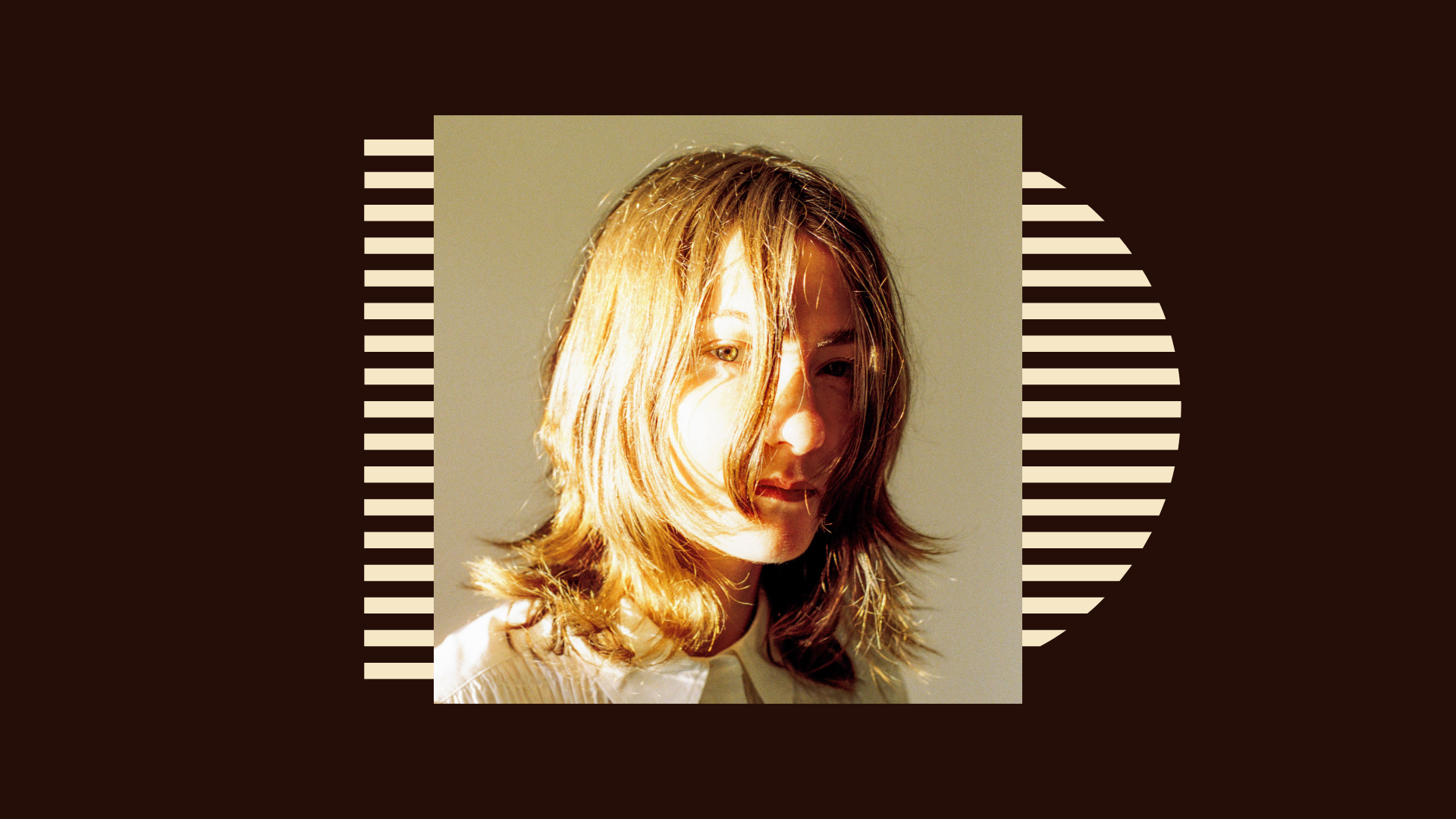
Bad Things Feel Good* is a testament to growth amidst the uncertainties of life. Through an indie folk soundscape, Rowena Wise sets her sophomore album as a discovery of the self. Intimate and authentic songwriting hold a mirror to those who don’t have all the answers, while the string production lays a comforting dimension. With themes such as mental health, familial ties, heartbreak and love, the record is a complete rotation of life’s core subjects.
Wise is an Australian musician who grew up touring with her family in a five-piece folk band. The daughter of musicians, she learned from her youngest age the beauty of music as well as the complexity of touring and performing. She moved to Melbourne at eighteen to pursue her own artistic path. In 2024, she released her debut album Senseless Acts of Beauty, a tale of reconstruction of self after a loss.
Bad Things Feel Good* starts with “Home In This World,” a slow guitar track that recounts how sadness encapsulates a life. There’s a question that stands out as the sense of not belonging takes over—where should you go? “More Horizon” displays a more hopeful sound as the lyrics consider the path ahead. A path of survival but full of complex obstacles nonetheless. Still, there’s hope as the focus increases on the good things around.
“Blood Ties” has a more upbeat nature to it, but the gravity in Wise’s vocals complements the issue of generational cycles explored in the lyrics. She doesn’t put the blame on the individual, rather focusing on the system that lets silence surrounding mental health go unchecked. Among the other singles, “Diamond In The Rough” reveals how self-esteem is affected when you focus on who you could be instead of who you already are.
The record explores heartbreak thoroughly. “No Angel” examines the tendency to idealize a partner, which creates a dissonance between the reality of a person and the idealized version of them. “Sum of Two” raises the difficulty of accepting how a relationship isn’t on the same wavelength for the two people involved. “Unlearning of Love” shares the earthquake that occurs with the approach of different relationship arrangements, such as non-monogamy. The production signifies this change as it becomes more distorted, but ultimately becomes calm again at the end.
The title track “Bad Things Feel Good” comes to the near end of the album. The acceptance of change throughout life’s waves is a major turn in the storytelling. It is also accepting there’s no need to have all the answers, when being present and allowing the waves pass through is enough. She ends the album on “Days Ahead,” an address to the person that witnessed everything unfurl. At the core, Bad Things Feel Good* is about the intricacies of what makes us human. It gives comfort to a wandering soul, with the reassurance that these experiences are what connects us to each other.
All Too Creative spoke to Wise about her latest album release, Bad Things Feel Good*, out now.
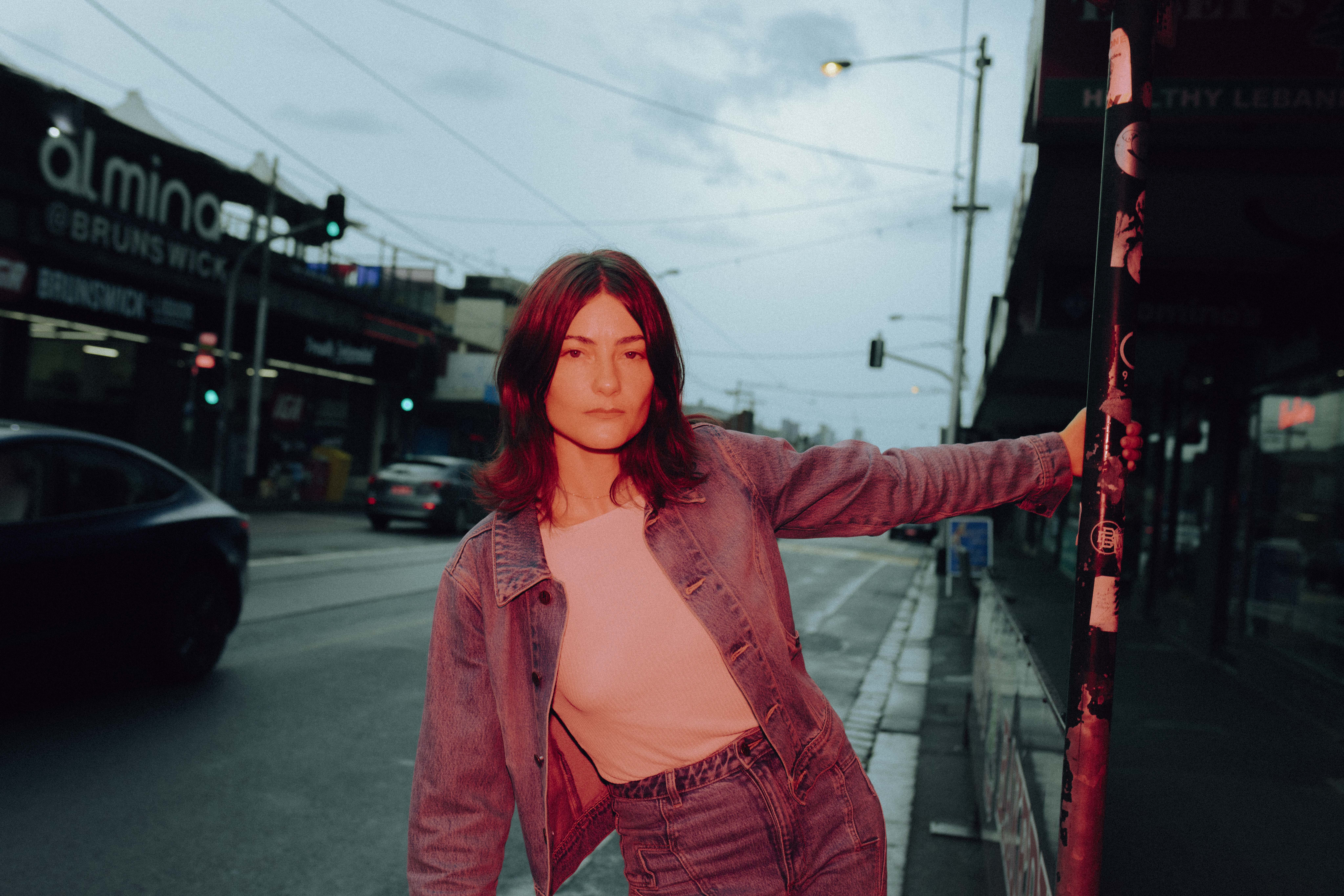
ATC: How would you describe this record?
WISE: I remember when I was writing this record. There wasn’t one day when I sat down and announced that I was beginning album two. All these songs started trickling out. I was moving around a lot, touring, and things felt uncertain, and there was a lot of gray area in my life, in my relationships, in my sense of self. This album is the result of me feeling like I don’t have to answer some deep questions I have had about relationships and mental health and my place in the universe. I can let them be messy and beautiful. It’s about sitting in the gray area.
There’s a lot of themes that are tied together by this overarching idea that bad things feel good. There are different themes that are heartbreak, family ties, mental health. I realized what ties these songs together was that they related to this title. To me, it rings true for all of them because there’s pain in growth and there’s pain in change. At the end of the day, if you allow that pain of growth to change you for the better, then it’s a good thing. It’s the growing pains of adulthood, essentially.
ATC: I noticed that you start the album with the lyric “I’m thinking about the end again.” It felt very poetic since it’s just beginning. Has this album been a sort of new beginning for you?
WISE: Yeah, it has. I put out my first album two years ago called Senseless Acts of Beauty. I remember writing that at the end of a horrible relationship. That album was about overcoming pain and finding self possession again. There was a throughline there, but I’m writing about the more challenging themes and the nuances of life that I relate to on this album. It feels like the beginning.
It’s funny because with every album, it feels like it’s the start of something, and it inevitably is. But it’s also the end of something because you’re putting out some songs that reflect a chapter of your life that’s over. You’ve had time to reflect and make an abstract into art, so it’s the ending of something. It’s also the beginning of sharing it with the world. These songs aren’t mine anymore, so touring them and playing them to lots of different people will infuse the songs or renew the songs with meaning because everyone listening will have their own different interpretations. Therefore, all the songs will have new meanings for me.
ATC: How do you feel you’ve evolved from your debut album to this one?
WISE: With the first album, I had the rush that one does when they put out a first album, and then they tour extensively with a band around them. The experience of writing the second album was colored by my experience of playing with a live band. A lot of the songs on Bad Things Feel Good were meant to be heard live with a band because I got used to playing music like that. I feel like that’s an exciting place to be, writing in a new way. That is backed up by this intention to surround the music with more sounds and more energy and more rawness. That wasn’t necessarily on my mind with the first album.
ATC: What message did you intend to send with “Blood Ties”?
WISE: I wrote this song when a close friend of mine was going through a mental health crisis, and I witnessed his father not knowing how to respond. He didn’t have the emotional tools and it just struck a chord in me. Culturally, I think that there’s all over parts of the world, but especially in Australia where I grew up in a small town by the sea. Talking about emotions and being vulnerable was always seen as a sign of weakness instead of an opportunity to strengthen your bond with those you love.
When I saw my friend going through this, initially I felt frustrated with his dad. I wanted his dad to comfort him and say the obvious things, to admit that he was scared. To simply sit beside his son and acknowledge the pain. The longer I thought about it, the more I saw that he was carrying his own unspoken history. That emotional repression was inherited. His father was the result of the time and place he grew up in, and he was doing his best but it wasn’t good enough.
This song is about being aware of generational cycles that are subpar, like silence around mental health and not being vulnerable and not being emotional. It’s less about blaming one person and more about how silence moves through families. Sometimes the inheritance isn’t a dramatic event. Sometimes it’s simply that nobody learns how to say, “I’m struggling too.” This song’s about realizing it’s important to say you’re struggling with those you love, otherwise distance is created.
ATC: Talking about your Australian roots, how has growing up in Australia influenced your perspective on being a musician? Was this career path something that was obvious to you?
WISE: Yes, because I grew up in a folk family band. I’m from a little town with one main street, and my mum and dad were musicians. My sisters and I, between the ages of eight and fifteen years old, would travel a lot and play as a five-piece family band. We drove across the Nullarbor Plain every summer to go play in the East Coast at festivals. That’s about 4000 kilometers one way. I got to experience that from a young age. We traveled so far, and it was fun but it was really hard to grow up like that too.
The benefits were that I saw how magical music is from a young age. It’s like the great equalizer. I’d see the same music affect lots of different audiences in the same way. I loved feeling like I was part of something beyond myself. It felt like my calling. If I was to step out of that experience and that lens, and have a bit more of a macro lens, Australia’s in a bubble. It’s very far away from the rest of the world. To travel to do a tour here on the East Coast, you have to drive ten hours between cities. It’s hard, and culturally, they love music here, but there’s more love of sports and more funding goes into sports.
I loved growing up here and going to the lengths I did with my family to experience delivering music to people. It’s interesting to feel that drive and that compulsion, and knowing that there are other parts of the world where it’d be slightly easier to have an art career like this. There’s other reasons why I’m still here: the nature is beautiful, the living standard is high, and my community’s here.
ATC: “Unlearning of Love” is the final single of the album. Why did you want this specific track to stand out on its own?
WISE: This track was somehow representative of the album in its energy. Not necessarily its themes, but I had a lot of fun trying to write about these themes. It’s a love song, but the context was I wrote it during a period of non-monogamy. I was forming connections without lots of the usual boundaries or expectations in place. That amorphous space was beautiful, but terrifying as well. I remember getting to know people and not always knowing what category the relationship would belong in, even if it was platonic. Some connections felt more intimate than friendship but didn’t necessarily need to become conventional romances. There was a thrill and uncertainty. Without the familiar script, I felt like I was flailing in the dark.
That song is not necessarily about the relationship structure of non-monogamy. It’s about the idea of learning to love without possessing someone. Learning to recognize that love can be just as deep, without possessing them, and without feeling like you have to define it immediately. Just letting it be, which is a really meaningful experience. It completely changed the way that I interact with everyone in my life, no matter what the connection is. Even strangers in the street, just not assuming what connection is going to ensue. It’s beautiful. The back end of that song, when it becomes tense and chaotic, I was trying to capture that feeling of this feels good, but it feels really bad. I feel uncomfortable, and I feel excited. This is fulfilling but my old self is changing and destroying itself.
ATC: I feel like there’s an emphasis in the record about humanity and what makes us human. What do you hope people understand better after listening to this record?
WISE: That’s a good question. I hope what people take from this album is a feeling that they’ve been witnessed in their potentially confusing place in life. I hope people feel like it’s okay to sit with the unanswered questions. Just sit in that space and don’t feel rushed to answer things. There’s a lot of contradictions in the human experience. Ultimately, if you don’t accept that, it’s going to be a lot harder to allow the current of life to take you places. I don’t want them to listen thinking I’ve solved those contradictions for them or anything. I hope they feel that somebody else has sat beside them and witnessed them through the music. Catharsis was not finding a clean conclusion with this album, it was telling the truth while it was still messy.
ATC: Who would you recommend your music to?
WISE: Oh, that’s a really hard one. I’d recommend my music to the deep thinkers and the deep feelers. Especially the deep feelers that have busy lives and don’t have time to have an emotional outlet for themselves. I’d like this album recommended to those that have to travel through liminal spaces to get to work. The people on the trains and the trams. Those that feel like there’s something unresolved in their life. Those that allow themselves to take a step out of their own lives for a moment and look at what they’re feeling, and do that through music.
Check out our last article here:
If you don’t want to miss any articles, make sure to follow us on Instagram!