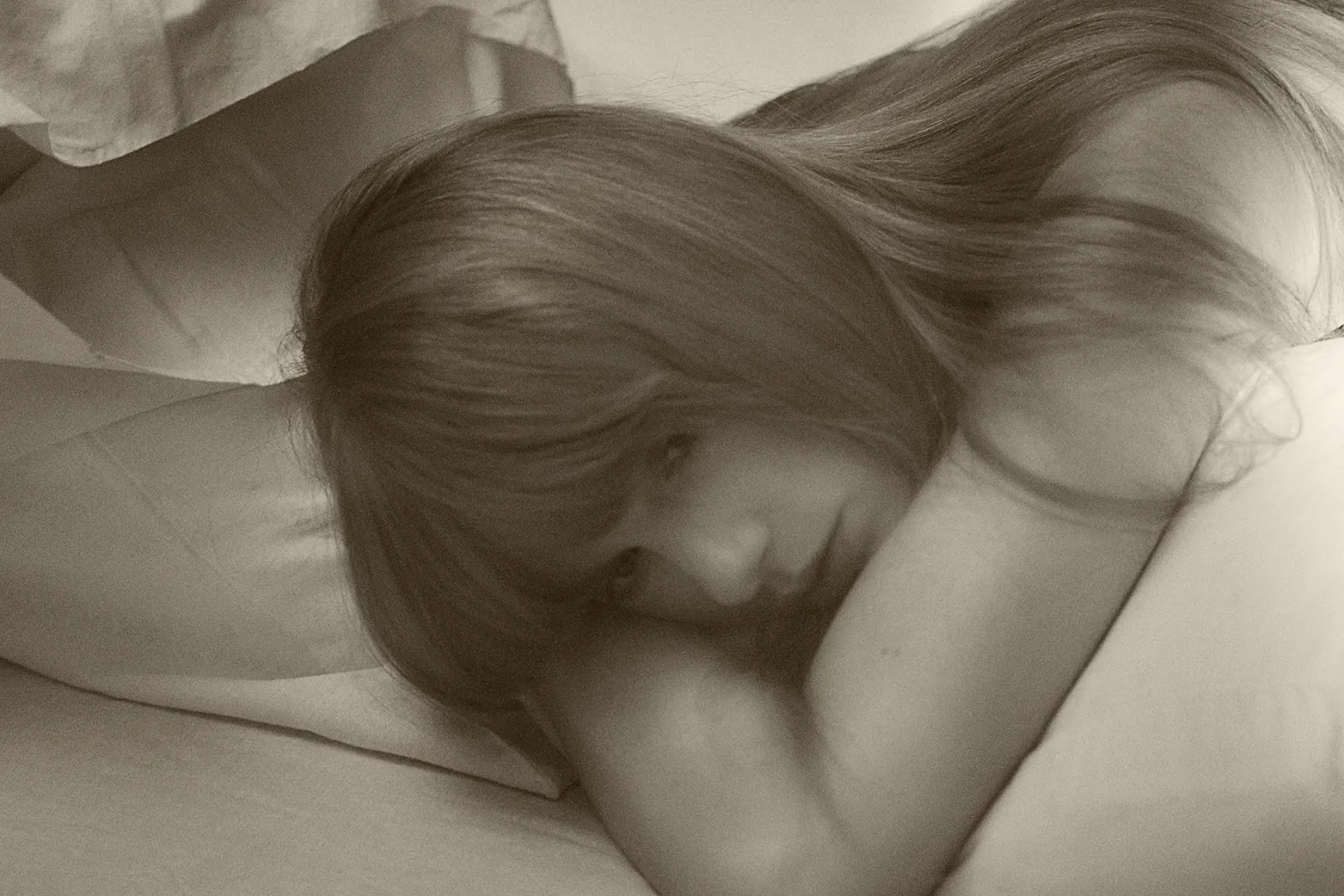
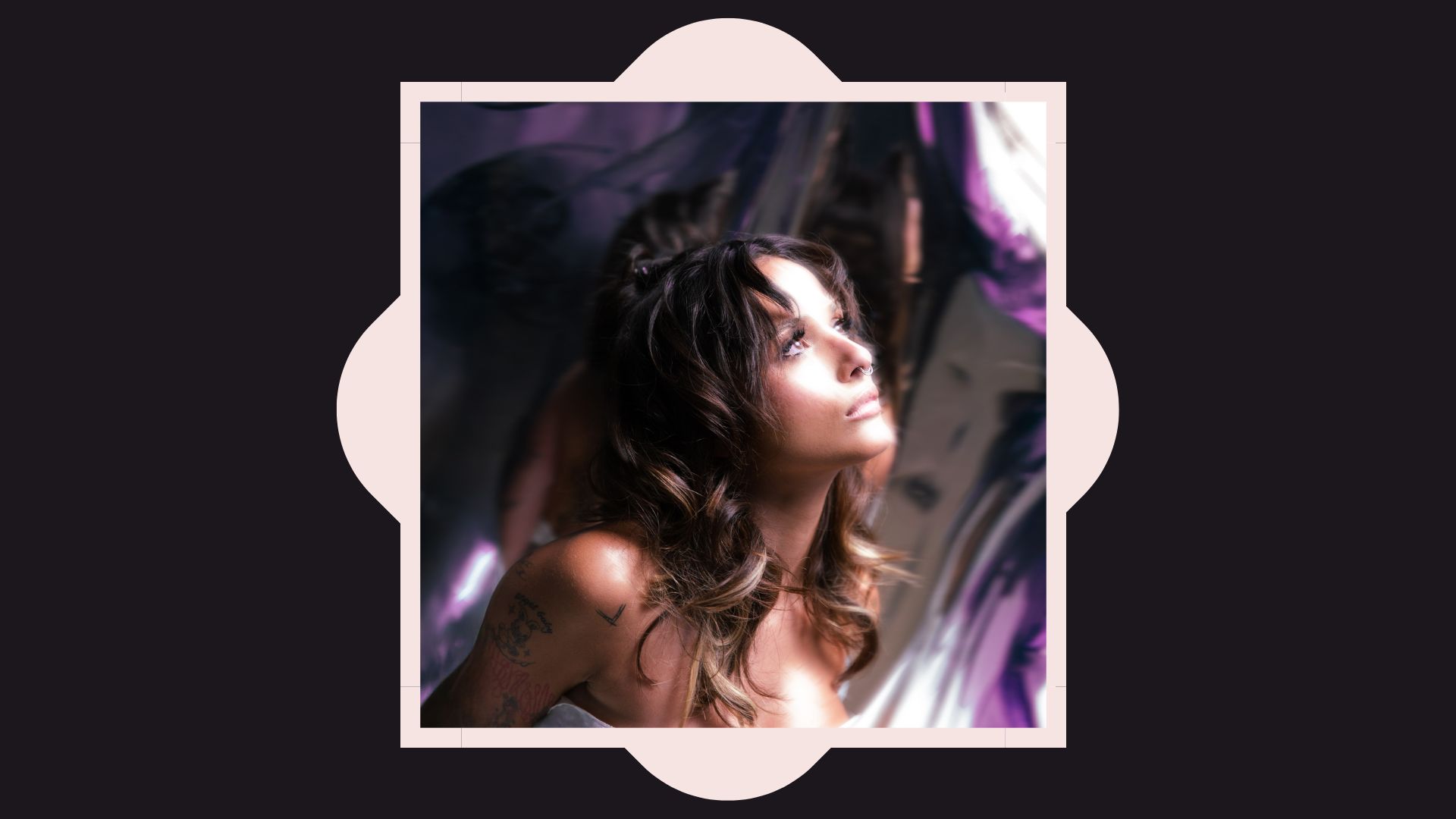
Alma Muñeca is the band you’ll want to know since their debut— and it’s not too late, since their first EP Deseo Un Brillo was released last month. The project makes sense of the painful experience of growing up and growing apart with a unique sound that draws the listener in from the first seconds. Alma Muñeca blends hyperpop and experimental pop, which creates an art-pop atmosphere that is a reminder of icons such as Charli xcx, but whose essence remains singular.
Alma Muñeca is a four-piece Austin-based band composed of vocalist Cocó Allegra and produced by Ernesto Grey, along with Matt Russell and Wade Stephens. Allegra moved from Panama to the U.S. when they were eighteen while Grey grew up in Mexico before moving to Austin in his teens. Together, they combine a wide range of inspirations, going from 2000s pop-rock and salsa to electronic and indie music. Through their art, Allegra aims to empower the Latino and queer communities.
Deseo Un Brillo recounts the various emotional states heartbreak entails. It is not limited to romantic relationships, as “Melancolía” deals with the realization that parents are only human beings and not the idols we made them up to be. Allegra’s vocals show the emotion that hides in plain sight of the hyperpop rhythm. The beginning track is “Llave,” who feels stuck in the aftermath of the loss of a relationship. As it picks up the pace, the song symbolizes the quick changes in mindset when faced with heartache.
“Anhelo” is the personification of yearning. As the beat rises and climaxes into a gripping instrumental in the chorus, so does the expression of desire. “Calor” sees a dive from the previous song with the dawning reality of the still present pain. It’s more controlled in the high-beat production and contains a stripped back moment of raw honesty where Allegra sings accompanied by a piano. “Eclipse” is the ending track which details the on and off nature of the relationship. Allegra’s stacked vocals create a widened dimension to a world that seemed to resume itself to a single viewpoint.
Alma Muñeca is a band that shows immense promise. Their debut project Deseo Un Brillo is a cohesive and well-rounded body of work that stands out in today’s music scene. Read below to find out more about Alma Muñeca.
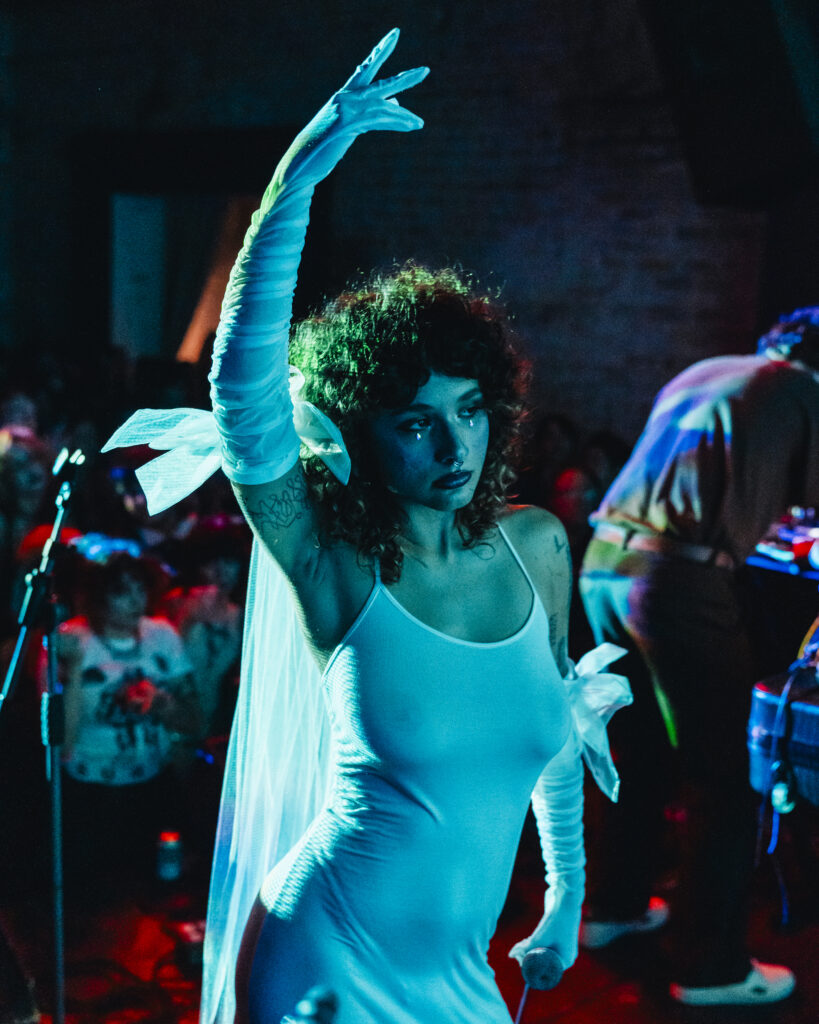
ATC: Could you tell us how the band came to be?
ALLEGRA: I was doing this photoshoot and one of the other models, Molly Masson, is a singer, a farmer’s wife, and has another local band. I was telling her, “Oh my god, I’m your fan. I love singing too, but I don’t know anyone I’ve clicked with musically to make some music here.” She told me to message Ernesto, and then we met up and we clicked. We were like, “Let’s meet up every week and see what happens.” And that’s what we did. Somehow Alma Muñeca was born along the way of meeting every week and making songs. Some songs are completely different from what we ended up doing.
ATC: How did you decide on the name of the band?
GREY: I don’t remember the reason why we wanted something in Spanish. I’ve been in bands before and I always named them somewhat the same way, which is putting one or two words together who don’t have a lot of relationships, and see if there’s a way to make sense of them. With Alma Muñeca, I was just trying to put words together in Spanish and there were a lot of options. That one I liked because it almost sounded like a stage name for a solo pop singer and everybody else in the band really liked it too. I was just grabbing words that resonated with the band or the aesthetic and that one stuck.
ATC: Congratulations on the EP! It’s gorgeous. The sound is so unique. Every element fits so well into place. For “Llave,” it has such a stable beat in the first part of the song, then there’s a transition where it speeds up. How does this switch convey what the song is about?
ALLEGRA: The first part, clearly, it’s very slow, it’s very sad. I’m talking about how this person locked the door and took the key with them and I have no way to access the other side. I’m sad about it, and I don’t know what to do. Then the second part, I’m just like, “I don’t need this key, I’m getting out of here. I’m packing my bags and I’m leaving and I’m done with this.” When you’re going through heartbreak, you experience all those things at the same time. “Llave” shows how you go from, “No, I need that person” to “Wait, I don’t need that person.”
ATC: Could you talk about “Anhelo”? It has such an interesting production element, in the chorus specifically, how did you come up with that?
GREY: That little melody is what started the whole song. We were hanging out with our other bandmate, Matt, and he has a bunch of modular synths and generally they mostly just make weird noises. They can be [musical], but generally, they’re not super musical. Matt was playing around and we got that little melody. On its own, it doesn’t mean anything. It doesn’t sound like anything but there was something about it that I was really drawn to. I told him to stop messing with it and let us record it. I had a feeling that the song should explode with that melody somehow and so the rest of the puzzle was just trying to figure out how to write a verse that could lead to that. Honestly, it was pretty difficult. The song is minimal, but getting there was very challenging, but I feel really proud of it now.
ATC: “Calor” has the imagery of extreme opposites with the warmth and the cold. What inspired the track and how was the songwriting process?
ALLEGRA: I feel like low key throughout the EP… Not in all the songs, but I do talk about how I feel inside in terms of temperature. In “Calor,” I’m mourning this warmth that was there for me, and now it’s gone. I’m saying my heart feels frozen, and I just feel like I could go into this frozen lake, and I’m not gonna even feel anything, or the sun is not even gonna make me feel warm. The whole EP is this heartbreak moment, except “Anhelo.” It is still heartbreak, but it’s like, “I don’t care.” “Calor” is definitely the saddest one. I’m just screaming out into nothingness about how I miss that warmth and I and it’s like, where did you go? Where did this warmth go? Why did you take it away from me?
ATC: Towards the end there’s an acapella moment where we only hear Cocó’s vocals and the piano. How did you decide to include that moment in such an electro-pop production?
GREY: There was something compelling about playing the song on the piano with Cocó. Whenever we were writing the song on the earlier days, we were just playing around on piano and vocals. When we were working on the production, there’s this band that really influences me a lot in particular, they’re called Jockstrap. One of their popular songs, they do that similar production style, where they’re coming in with very lush studio production and then they snap you out of it with an iPhone recording. I was like, “That’s super cool. Maybe I could do that with my song.” So I tried it and it felt really good. Usually I might have gone the other way and I might have been like, “Let’s be really big here, because it feels like a really big moment,” but I just wanted to try the opposite and I feel like that worked well.
ALLEGRA: I love that part too. When he sent it to me, I was like, “Yes.” When I was trying to figure out how to sing “Calor,” we would practice with the piano, and I always thought it sounded so beautiful and raw with the piano. I also love that the piano is throughout the song and it’s still an acoustic part of it.
ATC: With all the production elements, I didn’t really notice the piano, but then that moment comes and suddenly I hear the piano afterwards. I’m like, “Oh, it was here. I was just not noticing it.” “Melancolía” you said is about growing up and realizing that your parents are their own individual person and wishing to go back to that moment when you idolized them. What do you hope people take away from this song?
ALLEGRA: I can talk for myself, how confusing the journey is of growing up and that little chip in our brain when we’re children of seeing our parents as superheroes, like they’re the best ever. Then you slowly start feeling like, “Wait a minute, they’re just these humans that had a baby and definitely weren’t perfect at all.” You start realizing all these mistakes or flaws that they have, and it’s hard to accept. In “Melancolía,” I’m talking about how I wish I didn’t have to accept this, and I could just go back to thinking they’re amazing, but that’s not possible.
Your whole brain chemistry and personality changes when you realize that your parents are not perfect, and they’ve done things that hurt you or hurt other people, and somehow you still have love for them, but the light you see them in changes forever. It’s a very nostalgic moment and I’ve had a lot of trouble with that still in my adulthood. I’m 26 so it’s nice to have a song where I can sing about it. It’s funny because for both of my parents, that’s their favorite song. I’m like, “If y’all knew.” It could be taken as a normal heartbreak song from a romantic relationship, which the rest of the songs are, but not that one.
ATC: How did growing up in Panama influence you as an artist?
ALLEGRA: Well, in many ways. I just gotta say, because everyone gives credit to Puerto Rico for inventing reggaeton, but Panama invented it. I’m sorry, I just gotta say it, no beef [smiles]. I grew up surrounded by music. My mom was this media personality in Panama, and my dad was a club owner, so they knew all these local Panamanian artists. I grew up hanging out around them, and I was really shy when I was young, but it’s moments that I’ve soaked in forever. My dad raised me and he was always super encouraging about my talents. If I show interest in singing, he was like, “Okay, we’re gonna get you a singing teacher. You’re gonna take it seriously.” It’s nice that in my childhood I got to dabble into some creative stuff without knowing what a privilege it is to be able to do that.
I feel like part of me, the way I talk, the way I write lyrics, it’s all connected to Panama. We have our own way of talking, when I’m singing, sometimes I try to sing a clear Spanish that everyone can understand and then I’m like, “Wait, why am I doing this? I should sing and talk as a Panamanian person.” Obviously, coming to the US, I’ve tried to make my Spanish more understandable. It’s connected to me every day, I miss home every day. I do wish that one day I can go and share my art in my country because opportunities for artists in Panama, you have to be rich or something.
I came [to the US] with a mentality, maybe it’s propaganda, that here I could dabble into things I’ve never done, like being in a band. In Austin, so far, it’s been really great, and I’ve loved every moment of it. I’m really excited to expand on it. I feel like in Panama, there’s just a different view of artists and what art is. They might be a little close minded, but hopefully one day they can open their mind to Alma Muñeca and accept me, because I’m part of them.
ATC: The whole EP has the atmosphere of a nightclub. It really makes me think that I’m dancing in a queer nightclub. How do you hope your project inserts itself like in the LGBTQ+ community?
ALLEGRA: Being queer in Austin… When I moved to Austin, it was a big community of queer people who became my friends first and I felt I could express myself in that way. I also lived in Montreal and I also felt like that. I didn’t get to experience any queer community in Panama. It probably exists, but I left at 18 so I didn’t get to experience it. I feel like everyone around us is queer, at least 75% and that’s who I’m making the music for. This is more for the queers, because the queers have taste. That’s who I seek approval from.
ATC: It’s experimental pop that is so innovative. I feel like the queer community really appreciates that.
ALLEGRA: They always get it first. So many iconic pop stars or stars in general, their roots come from queer community supporting them. I want the queer community to accept us and our music. I don’t care about anything else. Honestly, I’m hoping that mixing queer and Latinos… but our EP is still pretty new, so hopefully it gets to all these people.
ATC: You said, “How can I feel so passionate and loving about someone yet I also feel so much confusion, anger and sadness about them too?” and that these songs help you freeze time and find healing and self confidence. Now that the project is out, do you feel that a weight has been lifted off of your shoulders?
ALLEGRA: Oh yeah. When I was writing these songs a year ago, I was in a different headspace back then, and it served the purpose in the moment to release all the feelings and confusion I was feeling in the moment. Now I can listen to it, and maybe it can take me back to those days, or I could just listen to the lyrics, listen to the music and apply it to what’s currently happening, even though I wrote it. I know what it’s about, but right now, it’s about this. That’s what I love about it, is that everyone can just listen to it and apply it to their lives and what they’re feeling in the moment. Being in Alma Muñeca really helped me feel that confidence about not being scared to be vulnerable and write something and for it to be in the world. It’s nice to not be scared of that and feel more confident to keep doing it and probably get more vulnerable and more weird about my lyrics in the future.
ATC: What are your plans as a band for this upcoming year?
GREY: We do have some more or less concrete plans. On the music side, it’d be nice to release maybe another EP or a single to keep momentum going. I don’t know about an album, that’s a lot of work and we’re nowhere near close to that, but we’ll see about that. Logistically speaking, we have made a decision to relocate. We’re gonna move from Austin to New York next year. Hopefully, by being in New York, we’re starting over a bit in the local scene, but hopefully we’re exposed to people who will be excited to have us there, both in the fan point of view and industry point of view. I think that’ll be like a better city for us overall. That’s what’s next.
ATC: Who would you recommend your music to?
GREY: I would recommend it to anyone who likes experimental pop, pop music that is a little left field, and isn’t afraid to try music that’s not in English too.
ALLEGRA: The international queers, listen to our music.
If you enjoyed this article, don’t hesitate to follow us on Instagram to keep up with us!
Read our previous article: