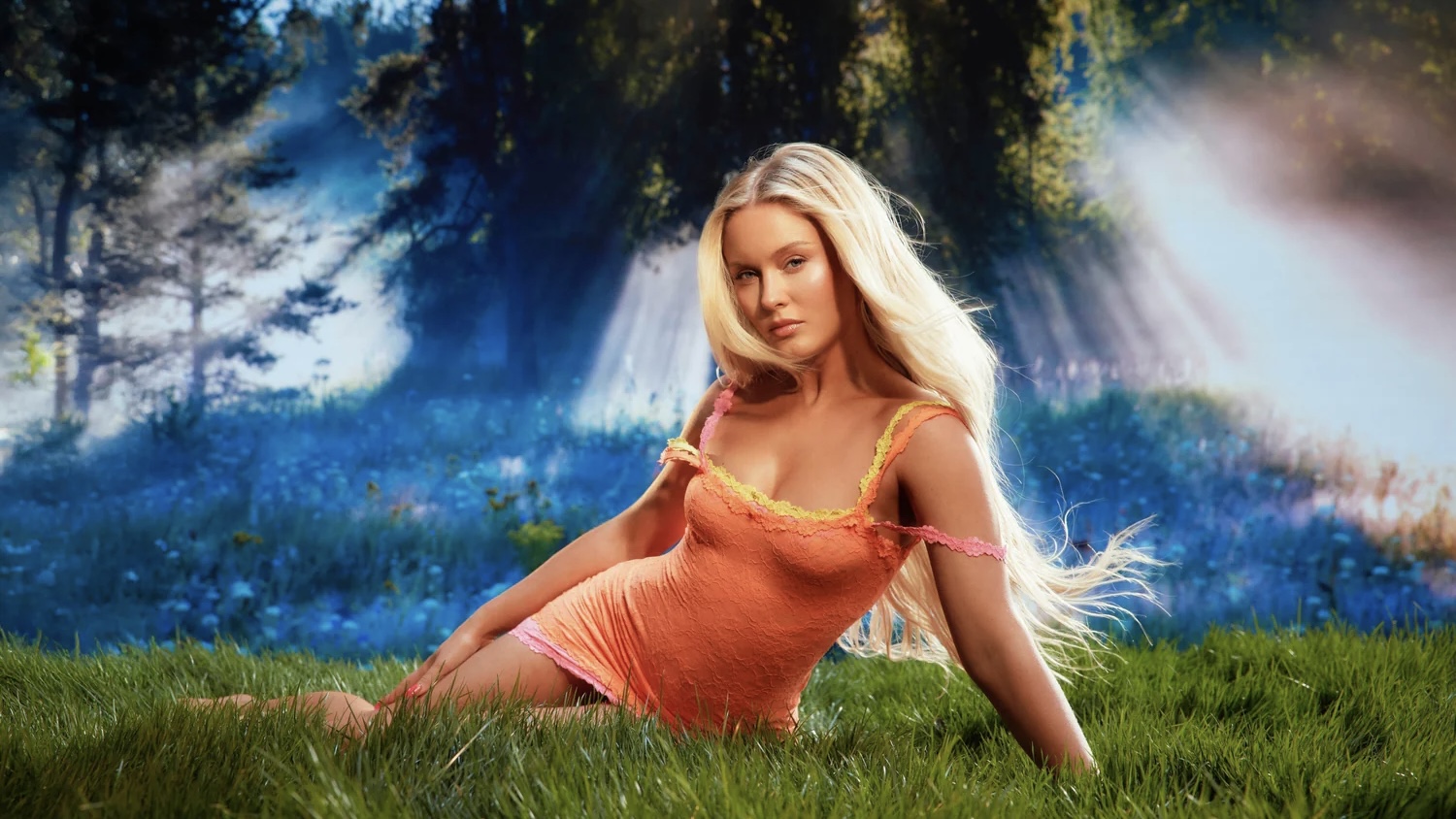
A week ago, Zara Larsson released Girls Trip—A remix album of Midnight Sun, the record which sent her off into main pop girl territory. Girls Trip reunites pop and R&B sensations such as PinkPantheress, Madison Beer, Kehlani and Tyla, while also featuring some iconic artists such as Shakira and Robyn. The wide reach that this record had shows Larsson’s growth during this past year, going from someone whose singles were played all over the radio but whose artist identity remained shadowed, to someone whose art became recognisable everywhere.
Larsson is a Swedish artist who won Sweden’s Got Talent in 2008 when she was 10 years old. At fifteen, she signed a record deal and released “Uncover, which received a lot of commercial success. She released her debut album 1 in 2014. Since then, she released four other albums: So Good (2017), Poster Girl (2021), Venus (2024) and Midnight Sun, released in September 2025.
With this latest era’s cultural reach, people figured out Larsson’s been around for a while. Her career spans singles such as “Lush Life,” “Never Forget You,” “Ain’t My Fault,” and “Symphony.” The public theorised that her brand and her artist identity weren’t well-defined beforehand. According to them, this caused her to fly under the radar for the majority, who would stop at listening to her singles and not dive deeper into her work.
I used to listen to Larsson’s music on Youtube before streaming services gained popularity. I have followed each and every move of her career. I’m here to clarify what has always been evident to me, which is that Larsson has been in tune with her creative identity for years. Her sonic development stayed consistent, without major changes in genre or thematics. She merely refined what was already there. Through a matter of timing and good moves in her career, she elevated her persona to mainstream.
A run through of her previous albums
There is evidence of the Midnight Sun inspiration since the release of her sophomore album So Good (2017). In the music video for “Lush Life,” one of her highest ranking singles, she showcases her dance moves over colourful patterns bursting in and out of the black and white aesthetic. The message of the single itself is the joyful energy that comes with having a crush, two themes that are essential on her latest record. From the same era, she released “So Good,” where she splatters her face with glitter. Another similar element is sitting on the top of a car from which an immense amount of flowers spill out from—flowers being the symbol of Midnight Sun, which decorated each one of her album covers in anticipation for the release.
Her next album Poster Girl (2021) has the most apparent show of the aesthetic. That starts with the cover art where she sits in a room filled with pink and stares ahead dreamingly while she sports a baby blue cropped sweater. The overall sonic and thematic identity of the project are aspects that are primordial to Midnight Sun. Her desire to become a poster girl tied with the romantic and sensual dimension of the record are main components that lead to her latest album. Her lead single “Ruin My Life” shows her connection to the era that brought her to the mainstream. As she walks around in a bright yellow wardrobe set against pastel skies, this music video seems to foreshadow Midnight Sun.
However, despite her early inspiration, her aesthetic wasn’t yet as detailed and specific as it is nowadays. Her back and forth between pastels and a more alternative look is clearly represented on “All The Time.” We see her experiment with bold make up and fashion looks. That dichotomy also appears on “Love Me Land,” where she’s wearing a black body suit along with glittery silver lingerie. At the same time, she has the glitter make up that has made the Midnight Sun era recognisable, while her dance choreography shows her potential as a pop star.
Venus (2024) leans more into a goddess-like aesthetic, but there’s still the main component of her discography, notably love. With a focus on the Roman goddess of love and beauty, this album shows the versatile and authentic songwriting that paved the way for her most recent album. She conveys her carefree and confident nature with “Can’t Tame Her,” that we also find on “Pretty Ugly” and “Hot & Sexy.”
Venus also showcases platonic and familial love in “You Love Who You Love” and “On My Love,” proving romance isn’t all she refers to. In the visuals, there’s hints towards the aesthetic with the jungle-themed night club in “Can’t Tame Her,” and even close-up shots of colourful flowers. “On My Love” shows the summer feeling that Larsson encapsulates in her artistry, with a representation of sisterly love leading to the girlhood experience that emanates from this era. “The Healing” paves the way in vulnerability for “Saturn’s Return,” proving her strength lies in ballads as well.
“End of Time” talks about the ambition that has been there since she was a kid. This video is an important facet to consider when analysing Larsson’s career trajectory. Through a representation of her as a pop star next to a younger version of herself, she approaches a subject she’s talked about on “The Ambition,” one of the last tracks on Midnight Sun. The comparison between these two songs shows she’s pictured this reality for a long time. We see her teaching her younger self dance moves, confidence in her persona, and most importantly, the joy and whimsiness that Larsson embodies. They make flower crowns together and support each other through hard times; which shows that her positivity is a choice she makes constantly. The trust she has in herself is what brought her to this moment in time.
The uniqueness of the Midnight Sun era
When releasing Midnight Sun in the beginning of autumn, she established a slogan that would define the era: “Summer isn’t over yet.” She insisted that summer isn’t a season, but a state of mind. With that, she played onto several aspects of her identity. The title itself references the midnight sun phenomenon that takes place in the Northern hemisphere, where the sun doesn’t set for months on end. Being from Sweden, Larsson has lived through that constantly. By bringing attention to that phenomenon, she transformed the temporality of summer into permanence. She inserted Midnight Sun into a record that could be listened to at all times, instead of aiming for a summer hit. The mindset has taken over social media, with people filming themselves dancing to “Midnight Sun” in the snow or rain.
Another aspect to be considered is the tracklist itself, from which each song serves a purpose. From giving us dance anthems to showing a depth of character that people identify themselves with, Larsson’s record is expansive in a way that feels authentic. She begins the record with the title track, which is recognisable not only for the mindset it prones, but also the high notes that place her as a strong vocalist. She approaches romance on “Blue Moon,” “Crush” and “Puss Puss,” giving the audience a common feeling they can relate to.

At the same time, she crushes her ‘good girl’ image with “Pretty Ugly” and “Girl’s Girl.” Through the lens of her flaws, she turns from an unattainable star into a regular human, who makes mistakes and isn’t perfect all the time. At the core of the album sits “Eurosummer,” which plays on the popular activity of spending your summer in Europe. It captivates the atmosphere of the season on a catchy beat influenced by traditional Eastern European (mainly Romanian) tunes that Europeans have grown up with.
If she grazed the surface of women needing to adhere to strict social constructs on “Pretty Ugly,” she dives deeper into the subject on “Hot & Sexy.” The track appears as an anthem for a girls night out, showing the carefree nature of going to parties, but turns into a real message towards the end. She shows that while this should be a refreshing activity that doesn’t require worrying, being a woman is dangerous because of the sexist and misogynistic abuses that surround our society. Larsson has been a vocal activist about a lot of societal issues, so a feminist track stays true to who she is and what she stands for.
She opens up about her journey as an artist who aims for more on “The Ambition,” which shows her dedication to success and growth since the beginning of her career. “Saturn’s Return” leans onto the subject as well, but in a more personal and vulnerable manner. Instead of searching for more, she contemplates everything that has brought her to where she is. Larsson talks about her strategic approach to her artistry and how she planned her career, only to be blindsided by the reality. By letting go of these expectations she placed on herself, she created what felt right for her—the Midnight Sun record—and propelled herself to stardom.
From flying dolphins and rainbows to the glittery pastel aesthetic
A notable aspect of her rise to fame is her inspiration. A while ago, there was a trend on TikTok and Instagram where people would caption an illustration of an idyllic sea world with a dolphin flying over a rainbow with contradicting statements, such as “I’m depressed,” while Larsson’s “Symphony” would play in the background. She saw the opportunity in that viral moment that she didn’t even start herself, but was included in nonetheless. By working with social media instead of against it, she got a head start.
Still, it isn’t the main point—in my opinion, it was her intuition that should be credited for the success of Midnight Sun. She admitted that the trend made her subconsciously realise the aesthetic was already there. She went back to the basics which meant working with Uzoechi Emenike (MNEK) as a producer and lyricist, which she had already worked with before, most notably on “Never Forget You.” At the same time, she also worked with Charlotte Rutherford on the visuals. Rutherford directed the music video for “Ruin My Life,” admittedly the one that most resembles Midnight Sun.
Larsson paired that with Y2K fashion, full of bright and glittery crop tops, low-rise jeans and bedazzled accessories by Caterina Ospina and Savannah Geebaker. On the makeup aspect, she worked with Sophia Sinot who dismissed the current ‘clean girl’ trends in favour of a bold makeup composed of pastels and glitter, mirroring her fashion looks in a bedazzled extravaganza. What made this era Larsson’s breakout is her listening to herself and knowing what feels good for her as an artist.
Why has her career brought her to the main stage now?
Besides the exquisite branding and excellent narrative line of the album, Larsson made a few additional moves that raised her fame levels. The first one is supporting Tate McRae on her Miss Possessive Tour in the United States. While Europeans have been familiar with Larsson for a while now, going abroad and performing this specific album in arenas is what put her on the radar of a lot of Americans. Following that success, she featured on the remix of “Stateside” alongside PinkPantheress where she opened up about her experience after that tour. Her verse and her presence in the music video were both fitting the aesthetic and sonic atmosphere that she built and further reinforced her recognisable persona.
In conclusion, what made Zara Larsson become famous overseas and in return be recognised as a household name is her intuition and trust in her abilities as a pop star. She let go of the expectations that surrounded a long spanning career and tuned in with herself. She made herself into the pop star she is today, standing on almost two decades of growth.
If you’re curious about our articles, don’t forget to follow us on Instagram to be up to date with everything we post!
Check out our last article here: